Citrea and Stacks are both Bitcoin Layer2 solutions, but they differ significantly in underlying architecture and security mechanisms. Citrea uses ZK Rollup, BitVM, and Bitcoin Settlement to anchor final state security to Bitcoin, while Stacks employs an independent chain and PoX (Proof of Transfer) mechanism to provide Smart Contract functionality through its own network.
2026-05-26 01:08:02
The ctUSD Vault serves as the core stablecoin liquidity module within the Citrea BTCFi ecosystem, delivering baseline liquidity to the Bitcoin DeFi Marketplace through stablecoin deposits, on-chain asset allocation, and CTR incentives. Its objective is to establish a more stable on-chain capital flow system within the Bitcoin Layer2 environment.
2026-05-26 01:07:48
Citrea delivers Smart Contract and BTCFi capabilities for BTC through zkEVM, Zero-Knowledge Proof (ZK Proof), and BitVM. Unlike traditional Bitcoin sidechains, Citrea focuses on a "Bitcoin-native" architecture, with the goal of anchoring final security to the Bitcoin main chain. Citrea's rollup process consists of five stages: trade execution, state packing, ZK Proof generation, data submission, and Bitcoin verification. User trades are first executed on Layer2's zkEVM, after which the system generates state proofs and completes final verification and settlement through BitVM and Bitcoin.
2026-05-26 01:07:34
Citrea is a ZK Rollup network leveraging Bitcoin as its data availability and settlement layers. By employing BitVM and Type-2 zkEVM technology, it delivers smart contract and BTCFi capabilities for BTC. Unlike traditional Bitcoin sidechains, Citrea emphasizes a "Bitcoin-native" architecture, seeking to enable BTC to support DeFi, stablecoins, lending, and on-chain financial applications without altering Bitcoin's consensus rules.
2026-05-26 01:07:26
Kaskad is a decentralized lending protocol built on the Kaspa ecosystem and running on Igra EVM Layer2. It allows users to access on-chain liquidity by collateralizing digital assets while keeping exposure to their original assets. The protocol uses an overcollateralized model, dynamic interest rates, a partial liquidation system, and a non-custodial smart contract architecture to provide native DeFi lending infrastructure for the Kaspa ecosystem.
2026-05-22 05:21:39
Kaskad’s security model mainly includes Health Factor risk monitoring, Partial Liquidation, the COB Oracle price system, Bounded Governance limits, and smart contract audit mechanisms. These designs aim to reduce bad debt, governance attacks, and price manipulation risks in on-chain lending.
2026-05-22 04:25:17
Kaskad and Aave are both decentralized lending protocols built on an overcollateralized model, allowing users to access on-chain liquidity by using digital assets as collateral. However, the two differ clearly in their underlying network architecture, governance model, risk controls, and ecosystem positioning.
2026-05-22 04:20:48
Kaskad’s lending system is built around liquidity pools, loan-to-value ratios, Health Factor, a dynamic interest rate model, and partial liquidations. When a user’s position becomes riskier, the protocol prioritizes partial liquidation rather than closing the entire position at once, helping reduce cascading risk during periods of sharp market volatility.
2026-05-22 04:10:43
Studio Chain is the Layer2 infrastructure launched by My Pet Hooligan, mainly designed for game assets, AI virtual characters, and digital entertainment content. Unlike traditional Layer2 networks that focus more on DeFi, Studio Chain emphasizes digital IP, community interaction, and entertainment ecosystem expansion, with KARRAT serving as the governance and gas token that supports network operations.
2026-05-18 03:15:12
Ethereum is a decentralized, open-source blockchain platform, distinguished by its pioneering implementation of Turing-complete Smart Contract capabilities. This innovation empowers developers to create a wide range of decentralized applications (dApps) on its global settlement layer. As the ecosystem's native asset, ETH functions both as Gas for network computation fees and as the principal Collateral securing the safety of the Proof of Stake (PoS) consensus mechanism.
2026-05-14 03:54:36
Starknet’s core goal is to improve on-chain transaction processing efficiency without compromising Ethereum’s security. It uses Zero Knowledge Proof technology to execute a large number of transactions on Layer2, then submits the proof results back to the Ethereum mainnet for verification, reducing the burden on the main chain.
2026-05-11 05:57:31
Starknet (STRK) is a Layer2 scaling network built on Ethereum. It mainly uses ZK Rollup, or zero knowledge Rollup, technology to improve transaction processing efficiency and reduce gas costs on the mainnet. Unlike executing every transaction directly on Ethereum’s main chain, Starknet first completes large amounts of transaction computation on Layer2, then submits the results back to Ethereum for verification through zero knowledge proofs.
2026-05-11 03:36:26
Starknet is a Layer2 scaling network built on Ethereum. Its core goal is to increase blockchain transaction throughput and lower usage costs while inheriting Ethereum’s security. As the Ethereum mainnet has increasingly faced higher gas fees and network congestion, more Layer2 networks have begun exploring different technical approaches to the scaling problem. Starknet is one of the most representative ZK Rollup networks among them.
2026-05-11 03:17:59
As the Ethereum Layer 2 ecosystem expands rapidly, liquidity fragmentation and the complexity of cross-chain operations have become new challenges. The Ethereum Economic Zone (EEZ) is a technical framework designed to address these specific issues. In this article, you'll learn how EEZ works, its core technologies, and how it drives the vision of One Ethereum.
2026-05-06 10:47:21
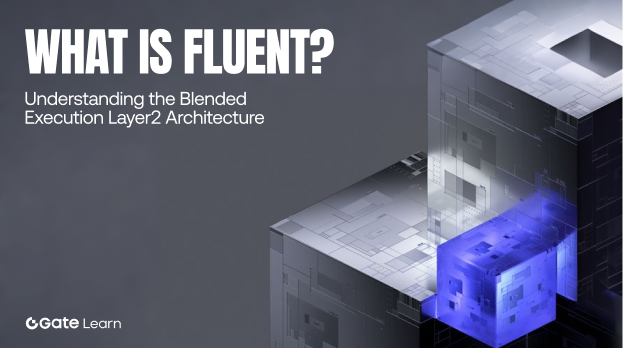
Fluent is a Layer 2 network developed on Ethereum, utilizing a Blended Execution architecture to allow applications from various virtual machines to run seamlessly on a single on-chain network.
2026-05-06 09:02:11